Showing posts with label food. Show all posts

Tuesday, 12 February 2013

Why we love some Asian cuisines and not others (@ Peril Magazine)

My latest blog post for Peril (Asian-Australian Arts & Culture Magazine) is about why some ethnic cuisines become so much more popular than others.

Yet it is also testament to the entrepreneurial spirit of certain ethnic groups who spread themselves around the globe and discovered they could carve out a successful niche in the restaurant business. Worldwide, few groups have done this as successfully as the Chinese, Italians, Indians and Lebanese. So it’s hard to talk about the success of the food itself without looking at the culture that produces it. The most successful culinary exports come from cultures that not only celebrate their own food (Italians being the best example of this), but also have a strong drive towards small business ownership. 

 Check it here.

Monday, 17 September 2012

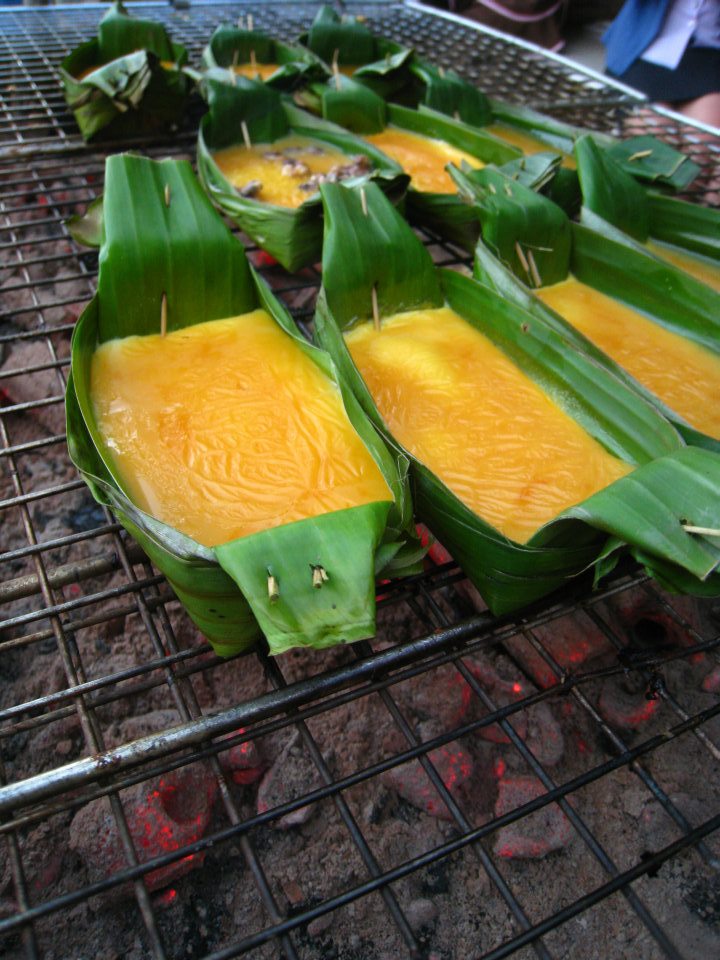
Sweet corn roti, Chiang Mai

Bought this at the Chiang Mai Night Bazaar, being sold by a woman I presume was from southern Thailand.. It's like a Malaysian-style roti chanai but filled with sweet corn and a beaten egg, and then topped with sweetened condensed milk.

I'm not sure whether that combination of flavours really made sense, but it wasn't bad. I'd order it again.

Tuesday, 24 April 2012

Obama eating dog meat as a child: proof of his unspeakable evil?

The latest reason Barack Obama is a terrible human being is that when he was a child growing up in Indonesia, he ate dog meat.

“With Lolo, I learned how to eat small green chill peppers raw with dinner (plenty of rice), and, away from the dinner table, I was introduced to dog meat (tough), snake meat (tougher), and roasted grasshopper (crunchy). Like many Indonesians, Lolo followed a brand of Islam that could make room for the remnants of more ancient animist and Hindu faiths. He explained that a man took on the powers of whatever he ate: One day soon, he promised, he would bring home a piece of tiger meat for us to share.”

Well, it's not really news; that's an excerpt from Dreams from my Father, which was first published in 1995 and has sold a bundle. So millions of people have read this paragraph before and never cared before. However conservative website The Daily Caller decided to make it into news recently. It's essentially a response to the stories of Mitt Romney driving around with a dog atop his car back in the 80s.

Now, to their credit, most conservatives don't seem to be treating this as a serious issue. Rather, it's a light-hearted way to mock the President. And fair enough, it's good fodder for some gags. Like when Republican strategist tweeted about this picture of Obama with his dog Bo (left): "In hindsight, a chilling photo." I'll pay that one.

Yet amazingly some on the right think this is actually a story, a microcosm of everything that is wrong with the liberal left. Here are some excerpts from a ridiculously deluded post from The American Thinker:

Condemning the transportation of a dog in a pet crate on a car roof while supporting a President with a history of eating dog is indicative of the imperious elitism the left often promotes.

Yes, people actually believe that something someone a 50 year-old man ate when he was around 8 years old, living in another country, has some kind of relevance to anything at all.

Dog jokes aside, if the President were truly concerned about dogs' well-being, he would still to this day be sickened at the thought of the lunch his stepfather Lolo served him 40+ years ago. Therefore, when signing the Animal Crush Video Prohibition Act, Obama could have redeemed himself by citing his personal exposure to animal cruelty as a child in Indonesia. The fact that Obama never mentioned eating dog meat is an illustration of how liberals excuse their own past offenses and feel justified standing up for contradictory arguments, even if that defense is accomplished by merely failing to expose past wrongdoing.
Think about it. Who else, knowing full well that at some point in his life he dined on Rover for lunch, would allow his campaign to express disapproval for the sin of letting a dog ride in a crate on the top of a car? Who, other than liberals, would dare to condemn the treatment of a family pet being taken on vacation, however the dog arrived there, after the candidate they support nonchalantly described snake meat as a little tougher than a mutt burger? In the end, if one tries to comprehend the rationale behind supporting a dog-eater while protesting cruelty to animals, the only justification can be that America's polymathic president is excused because his life experience includes a sincere reverence for an ancient animist tradition.

Regarding Romney putting his dog on top of his car, that's also a non-issue to me. I'm no expert in canine welfare, but I can think of plenty of other reasons to dislike Mitt than something he did back in the 80s which may or may not have been an inappropriate way to treat a beloved family pet.

But Obama-eats-dog is even less of an issue. With Romney, if it can be proven that his treatment of Seamus the Irish setter was indeed cruel (and I'm not sure that it was), then that at least it might say something about his character, since he was a grown-ass man at the time. What Obama ate when he was a kid has nothing to do with anything. It's not like he personally tortured and killed the dog before consuming it. A relative gave him some meat to eat, and he ate it. As you would expect of any well-raised child.

The American Thinker article even attacks Obama for not mentioning dog-eating every time he talks about animal welfare, and not being openly horrified when he does so. This is a really odd way to look at things. Is someone who campaigns for better treatment of cattle, yet who eats beef, a hypocrite? No.

It's a decidedly Western perspective that views dogs as being some kind of sacred beast that must be treated with reverence, in contrast to the millions of cattle, sheep, pigs and chickens that are raised in horrific conditions yet nobody gives a shit about.

Don't get me wrong, I don't support the eating of dog meat. I've had my own personal run-in with the stuff which had a major effect on me. But a dog is an animal, no more and no less than a cow or a pig. What separates one from the other is a purely arbitrary classification. I might be cuter and smarter than the guy next door, but that doesn't make my life worth any more.

And eating dog meat is a fairly common practice in much of Eastern Asia and elsewhere; in many cases, in regions where meat is a scarce commodity. (Ironically, it occurs only rarely in Indonesia, as it is considered haram in Islam.) I would hazard a guess that Obama recognizes that while the eating of dog meat might be unpleasant in concept, it is just a reality of the world. Putting Americo-centric judgements on the practice serves no great purpose in this context.

For conservatives, the dog-eating anecdote serves to boost one of the long-running avenues of attack on the President: that he is really a foreigner who is radically different from "real" Americans and doesn't understand them. Ironically, they are going to put their faith in Mitt Romney, a man who is far more out of touch with the average American than Obama ever was.

Wednesday, 21 March 2012

Thursday, 9 February 2012

Eating styles (@ Peril Magazine)

New post up over at Peril, the Asian-Australian online arts and culture mag. This one is about the various ways we stuff things into our gobs.

FINGERSPROS: Get “up close and personal” with your food, which helps negotiate tricky things like bones and gristle. Save on washing up. Gain cred points with SWPL types by showing you reject the stifling traditional bourgeois Western notions of table etiquette in favour of more “authentic” developing world ways.
CONS: Is possibly a health risk if you don’t wash your hands. Difficult to eat things that are too hot or cold, and is almost impossible to eat soupy dishes unless you have something carby to sop it up with. Also tends to result in your hand smelling like curry (or whatever) for the rest of the day. Tricky if you suddenly have to do something different during the meal, such as answer your phone. Also, people outside your culture may one day ask you why you don’t use your left hand for eating, which means you have to come up with a tactful way of saying that you use it to clean your ass.

Full post here.

Thursday, 2 February 2012

Ant egg omelette, Chiang Mai

Found these amongst the food stalls that appear each evening outside Huay Kaew Plaza in Chiang Mai. Red-ant eggs are a delicacy in northern Thailand and neighbouring Laos.

These look innocuous enough...
 The finished product...
 Ant attack! So that would be a cooked baby ant amidst the eggs, which are mostly pale in colour. There was greyish stuff in there as well but I couldn't really work out what that was.
Taste-wise, I'll first admit that I'm not the best person to evaluate this kind of food. I don't normally eat meat, and the ant eggs gave the omelette a somewhat meaty flavour. So not to my taste, but I didn't really expect it to be and I bought it mostly out of curiosity. It wasn't terrible though.

Wednesday, 11 January 2012

My favourite thing in the world, this week - "Pizza Boomerang"

I don't know quite what this is, but I do know that it may just be the best thing in the entire universe.


Suffice to say that I wasn't quite expecting what happens at the 1 minute 45 mark.

Internet, I want to hug you.

What your garden gets up to while you're away

So I was away overseas for 3 weeks, in the middle of what I'm told was a weird summer that featured both a heatwave and a hailstorm. My housemate watered and tended my garden a little in that time, but not enough to stop it from getting a bit out of control. But being left more or less on its own leads to a few unusual occurrences that I wouldn't have seen had I been looking after it in that time.
This bamboo was fairly uniform when I left, but then this single spike shot up dramatically.
Bamboo is the fastest growing plant in the world.


This is actually chicory, a somewhat bitter leafy green that I use to make Greek horta. Having constantly picked at its leaves, I'd never witnessed its beautiful blue flowers.


This is a chrysanthemum, but a variety that I have been growing for its leaves,
rather than its flowers. The leaves are common in Chinese cuisine, known as tong ho.
It may look impressive, but size is not everything.
This sort of thing needs to be harvested
when about half this size, as the flavour suffers
 with increased growth.

This is actually dill. It likes to be watered regularly for leaf production.
Without that, this is the result.


Tuesday, 20 December 2011

Insert innuendo here

This is a popular product in Jamaica, apparently. Courtesy of my friend Roderick Grant.
I couldn't decide between the multitude of double-entendres I wished to caption this photo with, so I'll leave it up to you, the readers. Please leave a comment with your best.

Tuesday, 6 December 2011

Asian Food and Australia's Changing Palate (@ Peril Magazine)

Here's another post I have up at Peril (Asian-Australian arts and culture mag): Asian Food and Australia's Changing Palate. The title pretty much says it all.

It’s frequently been said that despite the way many Australians laud the benefits of multiculturalism, this embrace of other cultures often doesn’t go any further than our eating habits. While someone may love the way a diverse society gives them a ready supply of felafels, fried rice and pho, they don’t necessarily interface at any deeper level with the cultures those foods came from. And while I agree that this is largely true, it is nonetheless a good start. Surely the broadening of the Australian palate has had some kind of positive effect on the broadening of our national psyche. I’m not sure how you would measure such a thing, but surely the bogan douchebags who yell out “curry muncher” at passing Indians would be less likely to do so if they could only spend more time munching curry themselves. It’s harder to keep seeing Afghanistan simply as a barbarous wasteland once you’ve discovered the frankly amazing things Afghanis can do with rice and kebabs. So perhaps the dudes slaving away in their shops making shawarma, som tum and futomaki are the ones who are really at the vanguard of combating racism in this country.
Check the full post here.

Saturday, 12 November 2011

Hotness

So a friend of mine and I were lunching at a cheap-but-effective Indian eatery recently. When it came time for the waitress to take our orders, she offered the standard array of spiciness options that you are frequently faced with in Indian restaurants: Would you like mild, hot or medium?

My friend plumped for “medium”, while I asked for “mild” instead. Interestingly, my dish (mild shahi paneer) turned out to be spicier than his dish (medium eggplant masala), which was not particularly spicy at all. We speculated on the reasons for this... had they just got the order wrong? Or had they decided to have mercy on a poor white guy who didn’t know what he was getting himself into? (He is white, while I am, well, 50% less white than he.)
Now I am quite partial to spicy food, yet I regard asking for anything other than the “mild” option to be fraught with risk. Because I’ve had allegedly “medium” things before that were hotter than the breath of Satan and threatened to burn a hole in my stomach; yet other restaurants serve “medium” dishes that would have any self-respecting Indian labeling it as being tasteless and asking to pass the extra chilli.

So as there is no universal measure of spiciness that every restaurant adheres to, how does one adjudge the right level to ask for?

I figure you can make an educated guess from the clientele of the restaurant. A place which mostly caters to a middle-class white crowd will probably have a completely different idea of "hot" than a place that caters to fresh-off-the-boat Indian students. So when they ask how hot you would like it, you might need to look around to decide whether "hot" means "hot for Indians" or "hot for white people", because the two things are quite different indeed.

(Cross-posted at Brown Pundits)

Wednesday, 21 September 2011

When White People Cook Asian Food (@ Peril Magazine)

"...But in practice, when white chefs try to do Asian food, there is often something missing. The balance of flavours is slightly out; it’s a bit like someone’s idea of what Asian food is, rather than actually being Asian food. The punchier aspects of Asian cuisine – garlic, chilli, fish sauce, shrimp paste, lime and so on – are muted, while the sugary elements are often too strong."

One of the reasons I haven't been posting quite as much on my blog recently is that I'm doing some guest blogging at Peril, which is an Asian-Australian online magazine. My first post - When White People Cook Asian Food - is up now; you can go check it out here.

Sunday, 12 June 2011

Learn to cook Malaysian food... from Rick Stein and Gordon Ramsay? Um...

I caught a bit of Australian Masterchef this week, in which two contestants won a trip to Malaysia to receive a cooking lesson and introduction to Malaysian food from British celebrity chef Rick Stein.

So what's wrong with that picture?

Rick Stein, of course. No disrespect to the guy, I don't mind his shows, and he has actually championed Malaysian cuisine in Britain in the last couple of years. But it's rather odd that Masterchef would send contestants to Malaysia - where there are presumably a large number of Malaysian chefs - and then present as the Malaysian culinary expert a fellow from England, who only really discovered the cuisine around 2009 as part of his Rick Stein's Far Eastern Odyssey series.

So how did Rick do? Well, he made a serviceable curry laksa, but did several things that were not authentic. Which is not a crime, but if you are going to be shown "the flavours of Malaysia" by an "expert", surely you'd want to experience proper Malaysian food and recipes, right?

No, because Masterchef repeats a well-worn idea in mainstream television that Western audiences can only understand Asian food through a Western interpreter.

Malaysian cuisine seems all the rage in UK celebrity chef circles now, as evidenced by Gordon Ramsay also doing a show in Malaysia. He spends a week observing various aunties making food, and by the end of it is presented as having mastered the cuisine, as he comes second in a nasi lemak-making competition despite apparently not knowing how to use a rice cooker. All that in only one week, Gordon? My, aren't you smart.

Perhaps Gordon is taking his inspiration from Sam Worthington's character in Avatar. White dude parachutes into a foreign land, is bamboozled by their exotic ways, yet in no time manages to beat the natives at their own game. Flirting with their women all the way. You win again, Mighty White Man.
You can watch Ramsay in Malaysia below.


Gordon Ramsay in Malaysia from Joseph Teo on Vimeo.

Tuesday, 31 May 2011

The Indonesian abbatoir scandal, and pain for the sake of "purity"

I would love Indonesia to make headlines in Australia for the right reasons, for a change.

 
CANBERRA - Australia suspended live cattle exports to 11 Indonesian abattoirs on Tuesday and announced a review into the A$320 million (S$421.76 million) trade after graphic footage was broadcast of Australian cattle being inhumanely slaughtered.

"I have decided to halt the trade of live animals to the facilities identified by the footage. I reserve the right to add further facilities to the banned list," Agriculture Minister Joe Ludwig said in a statement.
"I will appoint an independent reviewer to investigate the complete supply chain for live exports up to and including the point of slaughter," he said.
Australian national television on Monday aired footage of cattle being beaten, whipped and kicked prior to slaughter in Indonesia, prompting a political outcry in Canberra and Indonesian officials to call for calm to avert a trade row.
"It exposed nothing short of shocking cruelty for Australian livestock," said independent MP Andrew Wilkie, whose backing is vital for Prime Minister Julia Gillard's one-seat government.
Wilkie and independent Senator Nick Xenophon on Tuesday unveiled legislation calling for the immediate ban on live animal exports to Indonesia and a full ban of live animal exports to all nations within three years.
"The pictures we saw last night were horrific, and if it was happening here in Australia, those people would be arrested and prosecuted," Xenophon told a news conference.
More...
The footage, which was covered on ABC's Four Corners program Monday night,can be viewed here. It doesn't make for easy viewing, that's for sure.

A few thoughts:

  • Indonesians are, generally speaking, a warm and good-natured people, but the concept of animal rights remains a fairly foreign one. This is not to say that Indonesians are any more callous toward animals than most other people in developing countries; but there is certainly a widespread cultural attitude that views animals in purely utilitarian terms. It's quite telling that the Indonesian slaughtermen, knowing full well that they are being caught on video, treat the cattle in incredibly cruel ways and think nothing of it. 
  • It wasn't dwelt upon too long in the story, but one of the key issues here is halal butchery. Modern science has shown that stunning an animal unconscious before administering the lethal cut is by far the most humane way of slaughter. But Muslim countries everywhere have been hesitant to adopt this method, partly for economic reasons, and partly because stunning is not mentioned in the Qur'an. Even in Australia, where stunning has become mandatory in abbatoirs, some have been granted exemptions from this, in order to meet the demand for halal meat. (I'm not sure if this applies to kosher meat as well?) From what I understand, some halal meat production in Australia involves stunning, and some doesn't. Likewise for Indonesia. There needs to be some serious education about this in the industry, and among Muslims, who should really be the ones agitating about this. There is nothing in the Qur'an to my knowledge that forbids stunning, so I'm sure that if made aware, most Muslims would consider that stunning is not only more humane, but also compatible with halal regulations. Does Allah really consider it more religiously pure for animals to suffer much more than they need to? I doubt it. 
  • Unless stunning is made mandatory in Indonesia (which I doubt it will be any time soon, if ever), inhumane practices will continue unabated. The bottom line is money - it is a poor country. As everywhere, those with money are notoriously tight-fisted with it and unlikely to implement costly new technologies unless they are forced to. And even then, widespread corruption will be an impediment, as it always is in Indonesia. Even if Australia can flex its muscles and achieve some kind of victory here, which looks possible, it will probably only affect the livestock that comes from Australia.  
  • Those of you who favour a small-government approach in which industries are left to regulate themselves should consider this documentary as a powerful argument as to why industries shouldn't be left to regulate themselves.
  • As barbaric as some might consider the treatment of the animals in the documentary to be, bear in mind that this shouldn't be completely foreign or unimaginable to Westerners. Like many things in the developing world, Indonesia is doing what the West was doing about 100 years ago. And many animals in Australia still exist in awful factory farming conditions. So Australians shouldn't be too quick to get on their high horse. 
  • The footage of Australian-raised brahmin cattle awaiting their fate is disturbing, and Australian audiences were repulsed by the idea of these beautiful animals being put to death in a painful, efficient and careless way. But I do find it interesting that the same audiences have no problem with the basic idea of these beautiful animals being killed to make burgers and steaks. The only difference between the Indonesian and Australian methods is a few more minutes of stress and horrific pain - the end product is still the same. A nice creatures's life extinguished just so you can have something to go with your potatoes. Yes, I'm a vegetarian.

Sunday, 29 May 2011

Making pad thai, the vegan black metal way

I wouldn't say this is an authentic version of pad thai, but if you are a vegan black metal type of guy, you probably don't care.

Tuesday, 24 May 2011

South Asian diets and flatulence

Originally posted at Brown Pundits.

“Beans, beans, the musical fruit/ The more you eat, the more you toot” – children’s song

As you probably know, legumes (beans, lentils and peas) have high levels of oligosaccharides, which result in increased levels of flatulence. Whenever I hear someone mention eating baked beans (one of the principal legume-based dishes of Anglophone culture), someone else almost inevitably makes reference to their fart-producing capacity.

But brown people eat legumes like no one else. The average person in South Asia eats some kind of dal at least once a day, and probably more.

There are of course numerous other culinary cultures that revolve very heavily around legumes – Egyptians, Ethiopians and especially Mexicans – but South Asia is the global capital of legume consumption. India especially, given that around 400 million of its people are vegetarian and thus rely on dal as their primary source of protein; although due to poverty, I figure dal is still the main protein source even for the majority that do eat meat.

That would seem like a lot of farting.

Now, I haven’t done the research on this, and frankly I don’t want to. But would it be fair to say that Indians are the farting-est nationality in the world?

Or does one’s digestive system acclimatize to a diet high in legumes, to the point where flatulence is no longer a problem?

It is notable that both Mexican and Indian cuisines make extensive use of ingredients which supposedly lower flatulence levels. In India it is the powdered resin known as hing or asafoetida, while Mexicans add the herb epazote to their bean dishes.

As a vegetarian myself, and one who is very partial to Indian food, I eat a lot of lentils and chickpeas, and thus can personally testify that things can get pretty windy afterward. But I still don’t eat legumes quite as much as the average Mexican or Indian. So does the average desi household resemble dinnertime with the Klumps?


See also:

Foods that make you stink - Fenugreek

Sunday, 1 May 2011

Pennywort (Centella asiatica)

You may have come across this edible herb at your nursery. A creeping groundcover, it grows prolifically in my garden. Native to Southern Asia from Iran all the way out to Melanesia and Northern Australia, pennywort can grow anywhere where it gets sufficient water, particularly in ditches. It's also known as gotukolle or gota kola (its Sri Lankan name).

It is promoted primarily as a medicinal herb, for its alleged healing properties, which are impressive. It is considered to have anti-bacterial and anti-inflammatory qualities, and is used to treat conditions such as leprosy, hypertension, cancer and diabetes. Eating 2 leaves a day is said to markedly reduce the symptoms of arthritis, and it even is thought to be beneficial to brain functions such as memory and concentration.

I can't comment on how much of that is true, but there is surely something to it. And given how easily it grows, it makes sense to grow some. But here's the rub - it doesn't taste all that great. It's not horrible, but it is somewhat bitter and astringent, and not something you'd naturally wish to munch on.

Yet cook it in the right way and it can be delicious. The key is to balance its bitter taste with salty, sour and/or sweet flavour components. Numerous South and Southeast Asian cuisines make use of pennywort in such ways. Here are a few.

The Sinhalese cuisine of Sri Lanka makes great use of pennywort, in a vegetable preparation called mallung or mallum. There's a recipe for it here, which comes from Charmaine Solomon's classic The Complete Asian Cookbook. You can use any green leafy vegetable for mallung, or a combination of them, but pennywort is a common choice. It's simple and delicious as an accompaniment to rice and curry.

In Vietnam, where it is known as rau ma, pennywort is blended into a drink with water and sugar. You may have seen this green liquid in Vietnamese cafes and grocers. It has a taste which is slightly odd but not unpleasant.

The Kachin people of Burma make an unusual salad from pennywort which I came across on SBS's My Family Feast program. They combine the leaves with sliced tomatoes and red onions, coriander leaves and chilies, while the dressing comes from a combination of lime juice and salty fermented bean paste (easily found in Asian groceries). You can get a recipe and watch it being made here.

The way I most often eat pennywort is in a salad that comes from the Indonesian province of Aceh. It is called sambai on peuga-ga in Acehnese. I've adapted it from this recipe (written in Indonesian) via the Indonesia Eats blog. The leaf is little used in the rest of Indonesia - where it is known as pegagan - except in herbal concoctions. My recipe is a bit rough with measurements, so use your own taste as a guide.

ACEHNESE PENNYWORT SALAD
- 1/3 cup grated coconut (fresh is best)
- a bunch of pennywort, finely chopped
- several lime leaves, finely sliced
- 1/2 stalk finely chopped lemongrass
- 1 clove garlic, finely chopped
- 1 shallot, finely chopped
- juice from 1 lime
- 1 or 2 fresh chilies, finely chopped
- 1/4 cup roasted or fried peanuts, chopped
- a few fried shallots to garnish
- salt to taste
If the coconut is dried, moisten it slightly with a little warm water. Add to all the other ingredients and mix. Serve as an accompaniment to rice and main dishes.


NOTE: There is other plants often known as pennywort (genus Hydrocotyle), which look similar and some of which are edible, but I don't think they have any of the health-giving properties of Centella asiatica. Hydrocotyle leaves tend to be round, while Centella asiatica's are kidney-shaped.

Tuesday, 12 April 2011

The origin of fish sauce

Fish sauce is a well-known condiment in the cuisines of Vietnam, where it is known as nuoc mam, and Thailand, where it is called nam pla. It also turns up as a key flavouring in the Philippines (patis), Burma (ngan bya), Northern Malaysia (budu), Cambodia (teuk trei) Korea (jeotgal), and Japan (ishiru and shottsuru). Laos also has a chunkier variation called padaek. Fish sauce plays a vital role (particularly in SE Asia) in adding an umami (savoury) element to the flavour of food. It was once a common ingredient in China as well; indeed, there is a theory that the English word ketchup is ultimately derived from a Chinese term, ke-chiap, referring to a kind of fish sauce.

But while it is such a quintessentially Asian ingredient, you might be surprised that the Romans were using fish sauce far earlier. Not exactly the same thing, mind, but something eerily similar. Garum (and a similar product called liquamen) was a flavouring liquid made from fish innards and salt, left to ferment in vats. In fact it was originally an invention of either the Greeks or the Carthaginians, and it entered the Roman culinary pantheon when Rome conquered and/or traded with those regions.

Around 2000 years ago there was a thriving garum industry from the Iberian Peninsula to the Black Sea. But with decline of the Roman Empire also saw a decline in the use and production of garum, until it became virtually unknown in its former range. Anyone with even a passing knowledge of Italian food knows that fish sauce is hardly a typical ingredient in La Cucina Italia. It did not totally die out, however, as several monasteries preserved the knowledge and continued making a kind of fish sauce, today known as colatura de alici, from Amalfi in the region of Campagnia. Colatura de alici is made from anchovies, as are most varieties of Asian fish sauce. Garum, however, utilised a wide variety of seasonally available fish, although anchovies were indeed a common component.

There appears to be no historical mention of fish sauce being used in Asia before the Early Middle Ages in Europe, which oddly enough is around the same time its use was dwindling in the remnants of the Roman Empire.

Laura Kelley of The Silk Road Gourmet contends in a recent interesting blog post that fish sauce passed from Europe to Asia along trade routes. This is quite certainly possible, as many other items passed back and forth between East and West long before Marco Polo's time. Remember that at one time Rome controlled land as far east as what is now Turkey - situated at one end of the Silk Road that led all the way to Chang'an in China. Wealthy Romans' diet revolved very heavily around spices, which meant that the likes of cinnamon (from Sri Lanka) and Nutmeg (from Indonesia) were highly prized commodities (often acquired through middle-men such as the Arabs. Silk, obviously, was traded and exchanged as gifts between China and Rome. So clearly there was some opportunity for a product such as garum to pass from the shores of the Black Sea to the South China Sea.

I'm somewhat sceptical of this though. I have little doubt that it was the Mediterranean that gave rise to the first fish sauce. However, I'm inclined to think that it was invented independently in two places, either in China or a neighbouring nation.

I have a couple of reasons for this. Firstly, by the time fish sauce is proven to be in use in Asia, its use around the Mediterranean seems to have already declined substantially. Would an increasingly marginalised product really have made it to Asia and spread so comprehensively throughout the region? It's certainly possible; we have no way of knowing exactly when fish sauce was first used in Asia, and during the era when it was the principal flavouring ingredient of the Roman Empire, it would make sense to send it eastwards as a trade or gift item. But for this to happen, it would have presumably arrived in Northern China, spread to Korea and Southeast Asia within the next 1000 years, but then faded from use in China itself. I'm just not sure if all that is more believable than an independent East Asian origin.

But primarily, it occurs to me that not only are many of the cuisines around Asia are heavily based around seafood, but fish sauce is only one of a number of seafood-based condiments employed in Asia to add that umami taste.

Sri Lanka has its indispensable "Maldive fish", dried fish (usually tuna) pounded into tiny splinters which is then added to all kinds of dishes. Similarly, the cuisine of Japan makes extensive use of dried bonito flakes, which go into the dashi (stock) which flavours virtually every Japanese dish with a hint of liquid. Malay cuisine is well-known for its extensive use of pungent shrimp paste, or blachan; this product is also commonly used in Thailand and Laos (where it is known as kapi), the Philippines (bagoong), Burma (ngapi), and Indonesia (terasi). One of the most distinctive flavours of Cambodian cookery is the fermented mudfish paste known as prahok. Tiny dried anchovies (ikan bilis) are an extremely common flavouring ingredient in Indonesian and Malay cooking as well.

So given the ubiquity of these seafood products as flavouring agents, I think it's only natural that fish sauce would have arisen independently somewhere in East Asia. Fish sauce is a logical way to use the abundant small fish that are caught in regions that rely heavily on fishing. And it's not so unusual for almost identical culinary ideas to arise in different regions with no relationship to each other. The chickpea flour pancake of southern France and Italy (socca or farinata) is uncannily like the pudla of Gujarat in India, yet no country in between those two regions seems to make use of this idea. Returning to seafood-based condiments, West Africa has its own as well, with cooks in places like Senegal and Ghana using powdered shrimps and marine molluscs to impart savoury flavours to their dishes.

I'm not sure if the truth will ever be known on this. In any case, it's somewhat amusing to reflect that the diets of a Roman Senator and a farmer in Vietnam would have shared an ingredient that both would consider indispensable.

Wednesday, 9 March 2011

Eating seasonally and ethnically

People who are serious about their food often talk about the concept of seasonal eating. In other words, having a diet that revolves around what is in season at the time. The benefits of this are that you are theoretically getting your fruits and vegetables when they are at their freshest, cheapest, tastiest and most nutritious. By default you are more likely to be eating local produce as well, as out-of-season produce is brought in from greater distances involving greater fuel consumption. Thus it is a more environmentally sustainable way to live.

The other appeal of eating seasonally is a bit more intangible, and some would even say "wanky". It involves the appreciation of the cycles of nature, and a sense of celebration when foods come newly into season. The nature of the modern food industry means we have lost our sense of attunement with nature in our diets.

Now, all this appeals to me in theory, put I've never held it in much esteem, simply because I'm passionate about what I eat, and sometimes I just have to have certain things. If it's the middle of winter and I just have to have a salad involving fresh tomatoes, then I'm going to have fresh tomatoes. Losing my kinship with the cycles of Mother Nature doesn't really matter at that point. Likewise, the implied condemnation from seasonal-eating advocates of those who consume things produced in distant lands always struck me as a bit xenophobic. I'm Asian, dammit, and I love Asian food, and I need my tropical fruits, cardamom pods, Indonesian sweet soya sauce and fresh knobs of ginger. Without them I would be a pale imitation of the real me, but no one seems to be growing those things within thousands of miles of my temperate location.

However, I've been eating seasonally for quite a few months now, and it's not even on purpose.

The key has been growing my own vegetables. Since buying my own place I've developed an interest in this, but it has gradually turned into a full-blown obsession. Yes, I'm aware that such a pastime is not especially edgy or cool, but for some reason I like listening to gangsta rap while gardening, which I figure makes me pretty badass.

So Summer has just finished, and I still enjoyed substantial crops of tomatoes, eggplant, cucumber, capsicum, strawberries, zucchini and green beans, while I'm experimenting somewhat successfully with okra, bitter gourd and sweet potato. Likewise, in the Spring I grew so many broad beans and ate so many of them that I ended up having to freeze a couple of bags lest I risk never wanting to eat broad beans again.

Having such plentiful vegetables means that you have to make the most of it. It's effectively free, after all (the monetary outlay having come much earlier) and there is undoubtedly a feeling of smug satisfaction knowing that you can create your own food. Since I don't have any kids yet, agricultural pursuits will have to fill that nurturing void in my life, being another way of raising something from my own seed, if you will.

As an avid foodie I am capable of cooking things from a wide variety of cuisines, but seasonality means that certain cuisines take precedence at different times of the year. There are certain things you can only grow in Summer and early Autumn - tomatoes, cucurbits (cucumber, zucchini and the like), basil - so I draw from culinary traditions that make the most out of them. So that means the Mediterranean diet goes into overload. Greek, Italian, Turkish, Spanish, Provencal. Mexican too. Since I grow Thai basil and the lemon basil (kemangi) which we use in Indonesia, those cuisines get a good look-in as well.

But in Winter there aren't so many options. It's great for various green leafy things - spinach, edible chrysanthemum, snowpea leaf tips, various brassicas (the cabbage family) of both the European and Asian varieties. Which means that I start cooking Chinese and Korean food a bit more often. But in general there is less bounty, so it's a time in which I am forced to rely less on fresh pickings and more on the staples of the cupboard, such as dried peas and lentils, and tinned tomatoes. Thus the focus also shifts to Indian and Middle-Eastern stews and curries. The cooler months are also the bumper season for citrus; this combined with the profusion of leafy greens means that the Greek staple horta (cooked greens with lemon and olive oil).

Obviously there are themes developing here but I don't stick to them religiously by any means... I buy plenty of things out of season because I want to eat them. But it's more about making the most of what's available. You'll notice that I tend slightly towards Southern European foods in Summer and Asian foods in Winter. That is largely because Western food has a fairly simple approach to spices, and puts more emphasis on the taste of the vegetables themselves. Therefore you need to have good, fresh produce, and Summer is the prime time for this. Asian foods have a more complex approach to seasoning, which means that it is less imperative for the absolute best quality ingredients.

Of course, one of the perks of living in the modern world is that I can enjoy food that has been flown in from another continent to meet my particular needs. Whatever the ecological drawbacks of this, it at least means I don't have to just eat cabbage all winter. But now that I've learned to co-exist a little more with the seasons, there's certainly a certain intangible benefit to be gained, even if it's only a sense of smug self-satisfaction.

Tuesday, 8 February 2011

Random funny food things

You may remember that Jamie Oliver once had a show called The Naked Chef. Given that he is a man and never actually got naked, it was clearly seen as a hugely wasted opportunity by some canny Hong Kong TV execs.

A Hong Kong adult channel is set to debut a cooking show headlined by a nude host who will prepare Cantonese dishes wearing a transparent apron — an apparent bid to encourage more men to cook.
Host Flora Cheung will start each 30-minute show shopping for fresh ingredients in the city's famous wet markets, undressing once she is back in the privacy of her studio kitchen, the South China Morning Post reported. Cheung, who admits she has never worked in a restaurant kitchen, said she hopes the risque show will draw more men into the kitchen. The first episode is set to air later this month.
"I have always liked cooking and I thought I should share (the) enjoyment with more people," the 26-year-old told the Post.
"Most men don't like to cook, but I want to get them interested ... From shopping to cooking, it's the whole shebang," Cheung added.
The host promised that her tailor-made, transparent apron won't leave much to the imagination. "It covers pretty much everything but hides nothing," she was quoted as saying.
Producer Jesse Au told the paper that the show may spawn similar offerings with nude hosts cooking up a range of Asian cuisines: "This could be an endless series if it proves popular."(Source)
Note that it's not about mindless titillation at all - it's aimed at encouraging men to cook. See? All about the betterment of society. How caring of them.


Speaking of sexy cookery, ever watch Nigella Bites? I always wondered if she really meant to make everything sound like a double-entendre, or if it was just my imagination. This hilarious video makes clear that it was purposeful.


Meanwhile, a short burst of foodie goodness from The Onion:


And a look back at the clever British series Posh Nosh, which has a nice poke at the elitist aspects of foodie culture.